How to Style One Outfit in 5 Different Ways (Women’s Guide)
What if the secret to a bigger, more versatile wardrobe was not buying more clothes — but learning how to wear the same pieces in completely different ways?
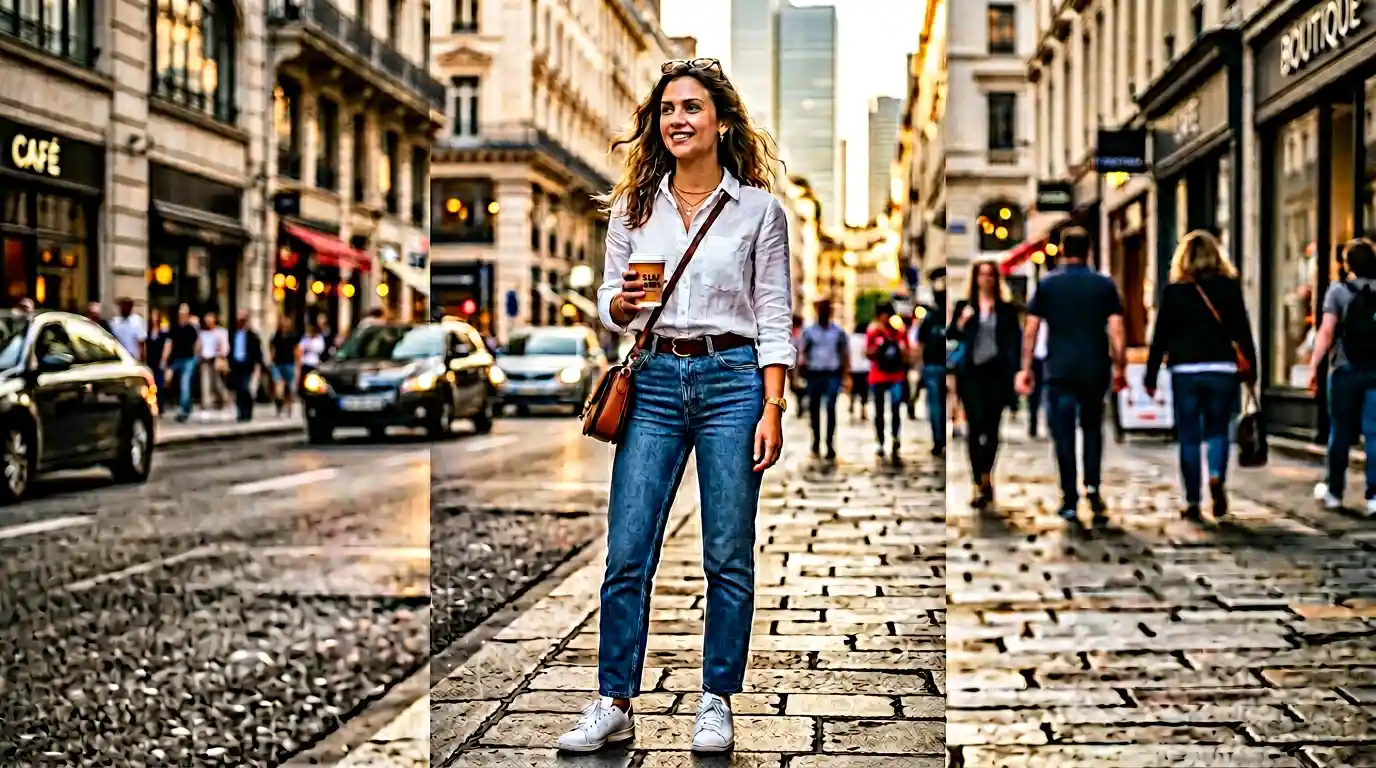
This is a skill that professional stylists use every single day. They take one base outfit — say, a white shirt and blue jeans — and through clever layering, accessorizing, shoe choices, and styling tricks, they turn it into five distinct looks that feel entirely different from one another.
One outfit for a Monday morning meeting, one for a casual weekend brunch, one for a dinner date, and so on — all from the same starting point.
The good news is that this skill is not reserved for professionals. Anyone can learn it. And once you do, your wardrobe will feel twice as large overnight without spending a single penny.
In this guide, we are going to take one classic, universally owned outfit — a white shirt and blue jeans — and show you exactly how to style One Outfit in 5 Different Ways for five completely different occasions.
Why Learning to Restyle Outfits Changes Everything
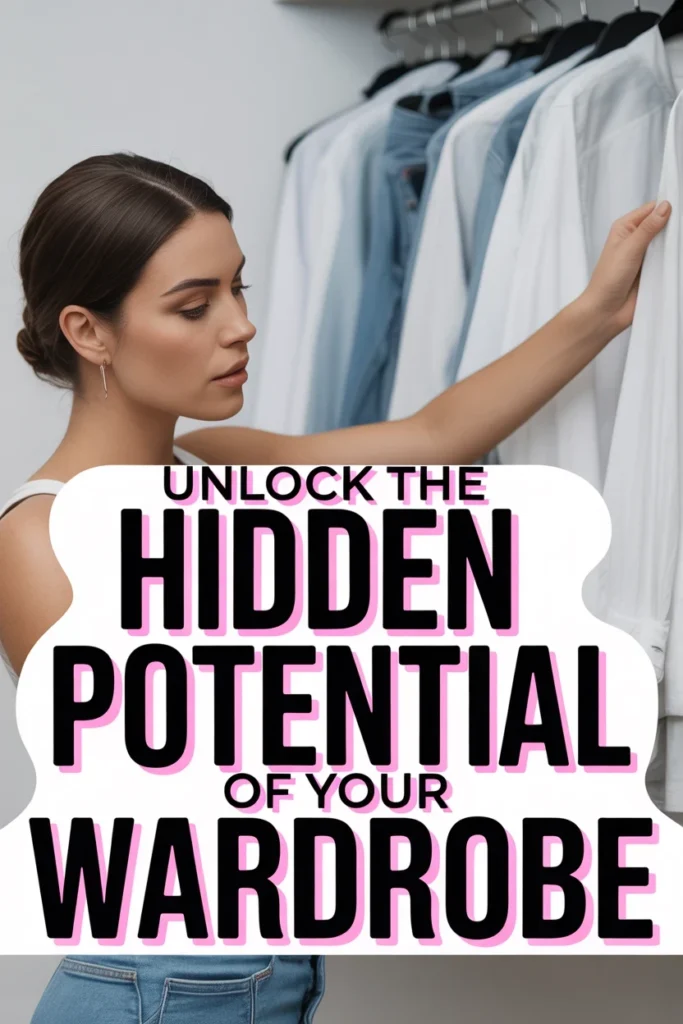
Most people wear every item of clothing exactly as they imagined it when they bought it. A white shirt gets tucked into trousers. Jeans get worn with a casual top. A blazer goes over a work outfit.
The combinations rarely change — and as a result, the wardrobe starts to feel stale and repetitive even when it is full of great pieces. Learning to restyle what you own is the single most effective way to permanently break out of this cycle.
The Problem With Only Wearing Things One Way
When each piece works in only one context, the number of usable outfit combinations shrinks dramatically. A wardrobe of 30 items, worn only in their default combinations, produces far fewer outfit options than a wardrobe of 20 items, worn creatively and with intention.
One-way dressing makes wardrobes feel far smaller than they actually are — and it leads directly to the frustrating feeling of having nothing to wear despite owning plenty of clothes.
It Creates Unnecessary Shopping Habits
When you feel like you have nothing to wear, the instinctive response is to go shopping and buy something new. But in most cases, the problem is never a lack of clothes — it is always a lack of styling perspective.
Every time you reach for your credit card out of wardrobe frustration, what you actually need is not a new piece but a new way of looking at the pieces you already own. Learning to restyle eliminates this costly and unnecessary cycle almost entirely.
It Keeps the Wardrobe Feeling Fresh Without Growing It
When you start seeing each outfit as having five or more potential versions hiding inside it, your existing wardrobe suddenly feels new again. Pieces you had forgotten about become exciting again.
Combinations you had never considered start revealing themselves. The wardrobe does not grow — but your relationship with it transforms completely, and that transformation is worth far more than any shopping trip.
What Changes When You Master Restyling
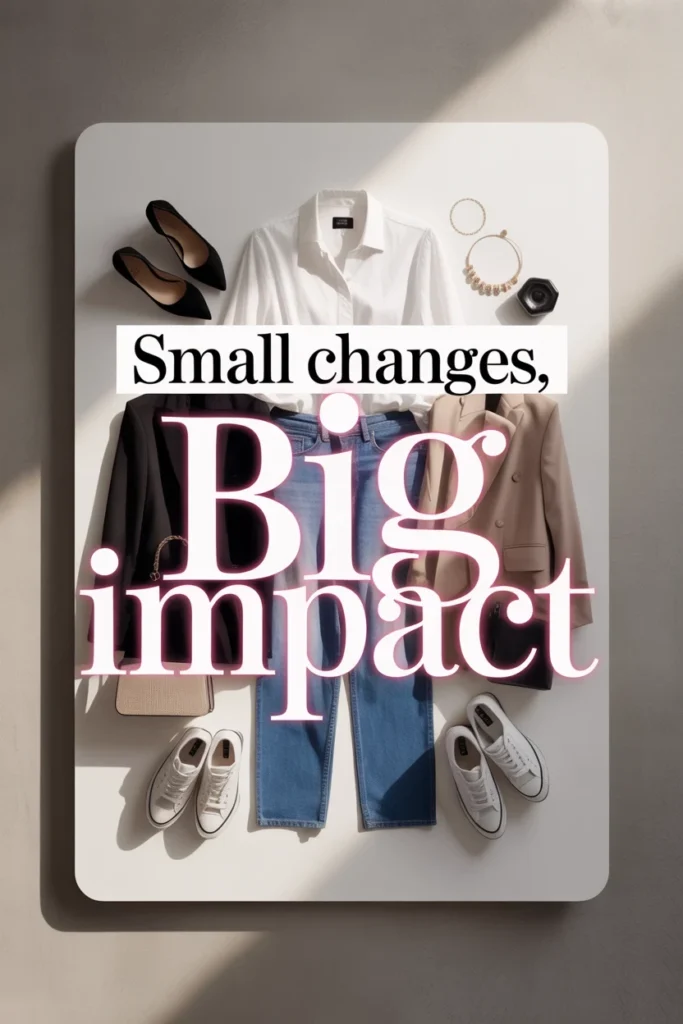
Mastering outfit restyling does more than save money. It develops a genuine understanding of proportion, color, layering, and personal aesthetic, making getting dressed feel creative and enjoyable rather than stressful and repetitive.
With this, you can start building a personal style that is entirely your own — one that is rooted in what you already own and what already makes you feel great.
Your Confidence in Getting Dressed Grows Significantly
When you know how to work with what you have, the daily act of getting dressed shifts from a source of anxiety to a source of creative satisfaction. You stop second-guessing every outfit and start making deliberate, confident choices.
That confidence is visible—and it is the single most powerful styling tool available to any woman, regardless of budget.
Base Outfits: Why a White Shirt and Blue Jeans works

We are using a white shirt and blue jeans as the base outfit for this guide because they are quite possibly the most universally owned combination in women’s fashion.
Almost every woman has both items hanging in her wardrobe right now — and they are one of the most versatile starting points in all of styling. Clean, neutral, and endlessly adaptable, this combination is the perfect canvas for demonstrating the full power of outfit restyling.
Why This Combination Is the Perfect Starting Point
A white shirt and blue jeans work as a styling base because both pieces are neutral in the context of outfit building. They do not compete with accessories, outerwear, or shoes — they support and elevate whatever is added around them.
They are also flattering across all body types when the fit is right, and they work across casual, smart-casual, and semi-formal settings, depending entirely on how they are styled. That rare versatility is exactly what makes them the ideal outfit to restyle five completely different ways.
Getting the Fit Right Before You Start
Before attempting any of the five looks below, make sure both pieces fit your body well. A white shirt that pulls across the shoulders or jeans that bunch at the ankle will undermine every styling effort you make.
If necessary, have the shirt tailored at the shoulders or the jeans hemmed to the right length — these small, inexpensive adjustments make an enormous difference in how polished every version of the outfit looks.
5 Ways to Style One Outfit
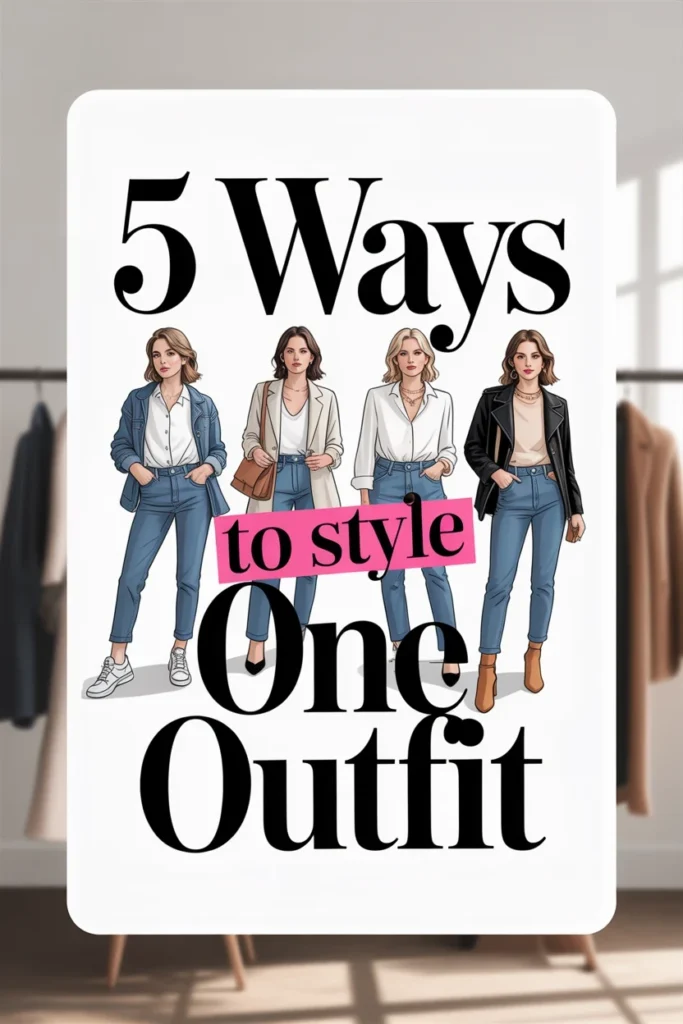
Styling the same outfit five different ways is not about drastic changes. It is about understanding which small, deliberate adjustments — a shoe swap, a layer added or removed, an accessory changed — shift the entire mood, energy, and appropriateness of the outfit for a completely different context.
1. The Smart-Casual Office Look
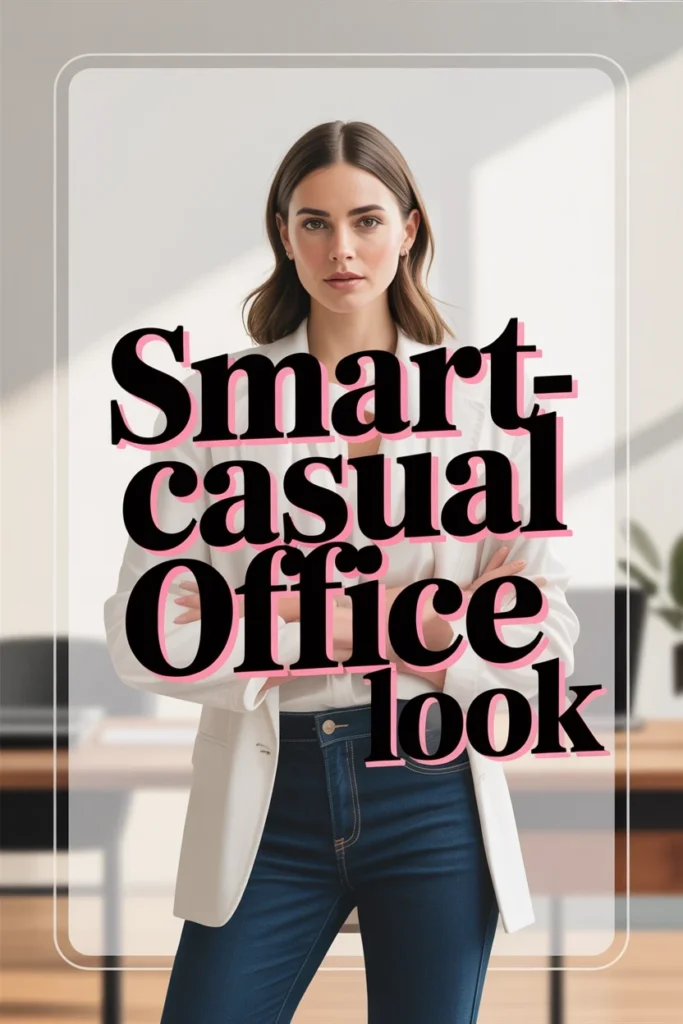
The goal of this first look is polished, professional, and put-together — appropriate for a creative office environment, a client meeting, or any smart-casual workplace setting where you want to look intentional and well-groomed without being overly formal or stiff.
How to Build the Office Look
Tuck the white shirt fully and neatly into the waistband of the jeans. A clean, full tuck immediately elevates the outfit and signals deliberate effort. Choose the darkest wash of blue denim you own — dark denim reads as significantly more formal and polished than light or distressed denim, making it far more appropriate for professional settings.
Add a tailored blazer in a neutral tone — black, camel, navy, or grey all work beautifully — making sure it fits well at the shoulders.
Shoes and Accessories for the Office Look
Choose clean pointed-toe heels, block-heeled ankle boots, or smart leather loafers. The shoe choice has a significant impact on the overall formality of the look — a polished heel or a structured flat instantly communicates professionalism.
Keep things minimal and deliberate: a structured handbag or quality tote, a simple watch, and small gold or silver earrings. Avoid anything too large, too colorful, or too casual — clean and understated is the goal here.
Why This Look Works
The combination of a full tuck, dark denim, a tailored blazer, and polished footwear creates a cohesive, professional silhouette from what is essentially a casual base outfit.
The white shirt acts as a crisp, clean foundation that the blazer anchors perfectly — and the overall look communicates competence, style, and intentionality without requiring anything beyond what you already own.
2. The Relaxed Weekend Brunch Look
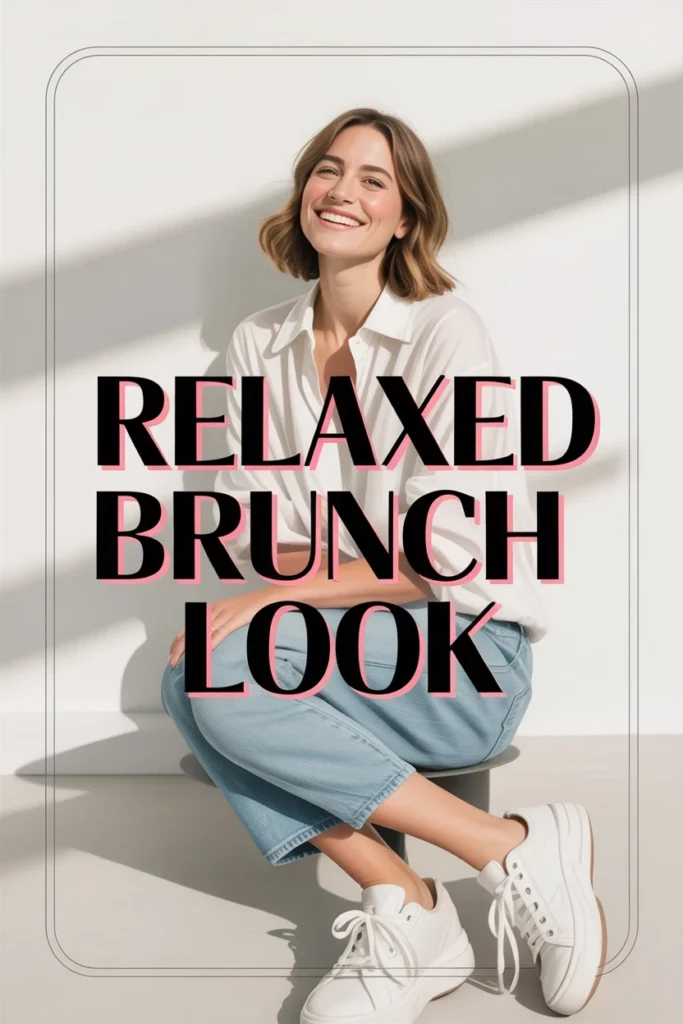
The second look is the opposite of the first in almost every way. The goal here is effortlessly casual, comfortable, and relaxed — the kind of outfit that looks like zero effort went into it, yet still looks completely put-together and stylish.
How to Build the Brunch Look
Leave the shirt completely untucked and unbutton the top two or three buttons for a relaxed, open neckline that feels casual and approachable. Alternatively, tie just the front hem into a loose, low knot at the waist to add a little shape without committing to a full tuck.
Reach for your lightest wash, most relaxed-fit jeans — slightly faded or gently distressed denim leans into the casual weekend energy perfectly.
Roll the hems up once or twice for an effortless, easy finish that also shows the ankle and makes the shoe choice a visible feature of the outfit.
Shoes and Accessories for the Brunch Look
White trainers are the obvious and perfect choice here — clean, minimal, and universally flattering. Flat sandals or canvas slip-ons also work beautifully if trainers feel too sporty for your personal taste.
For accessories, this is where you can have genuine fun. A baseball cap, a canvas tote bag, layered delicate necklaces, or a pair of playful hoop earrings all work wonderfully. Keep it relaxed and joyful — this is not the look for structured handbags or formal jewelry.
Why This Look Works
The untucked or knotted shirt, relaxed light-wash denim, casual outerwear, and trainers create a cohesive, laid-back energy from the same base pieces used in the office look.
The shift in styling communicates an entirely different context and mood — proof that the clothes themselves are never the whole story.
3. The Evening Dinner Date Look
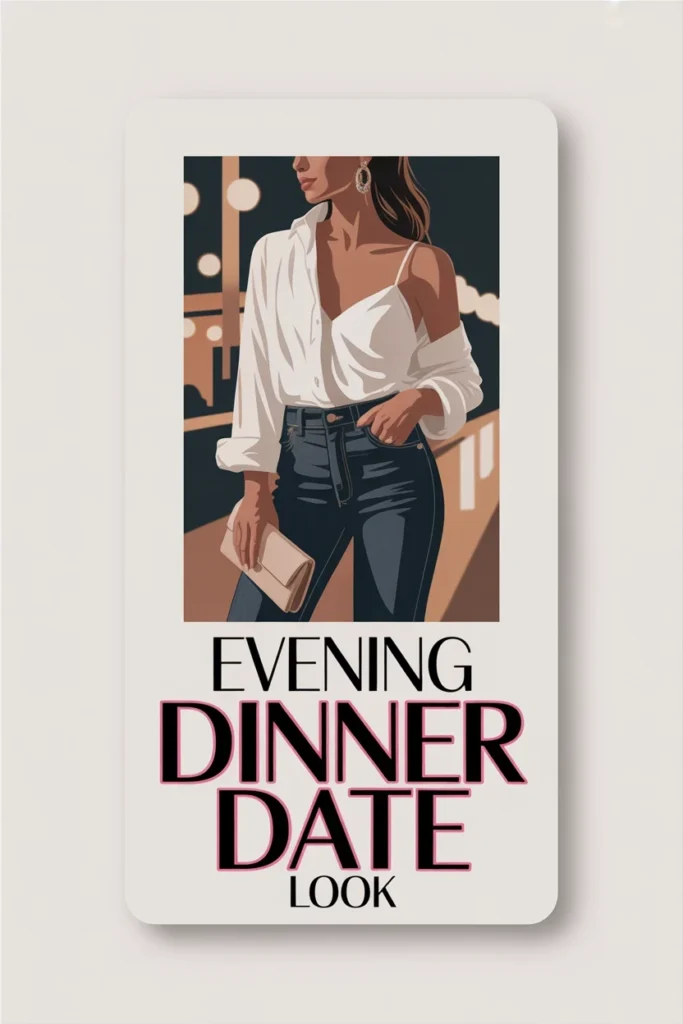
The third look transforms the same white shirt and jeans into something genuinely elegant and evening-appropriate. The goal is feminine, slightly dressed up, and appropriate for a dinner date, an evening event, or any occasion that calls for something a little more special without crossing into fully formal territory.
How to Build the Dinner Date Look
This time, wear the white shirt completely open, all the way down, as a lightweight outer layer over a delicate satin camisole or a fitted silky top in a soft neutral tone underneath.
The open shirt worn as a layer creates an instantly sophisticated, fashion-forward look that feels deliberate and editorial. Alternatively, tie the shirt at the front into a chic, neat knot and leave it buttoned from the knot upward, exposing a refined hint of the camisole below.
Choose your most flattering, best-fitting pair of dark jeans — slim, straight-leg, or wide-leg all work beautifully for an evening look as long as they fit impeccably and look clean and intentional.
Shoes and Accessories for the Dinner Date Look
This is the single most powerful change you can make to an evening look: swap flat shoes for heels. A heeled sandal, a sleek stiletto, or a delicate pointed kitten heel instantly transforms the outfit from daytime to evening, altering the posture and silhouette of the look.
For accessories, bring in genuine glamour: a small evening clutch or fine chain bag, statement earrings in the form of chandeliers, dramatic drops, or oversized hoops, and a fine layered necklace.
A bold red or deep berry lip color ties the entire look together and signals unmistakably that this is a dressed-up, intentional, evening outfit.
Why This Look Works
The open or knotted shirt styling, the elegant camisole beneath, the heeled shoe, the statement bag, and the bold jewelry all communicate evening sophistication from a casual daytime base.
The transformation is almost entirely in the styling decisions rather than in the clothes themselves, which is precisely the point of this entire guide.
4. The Cozy Autumn Street Style Look
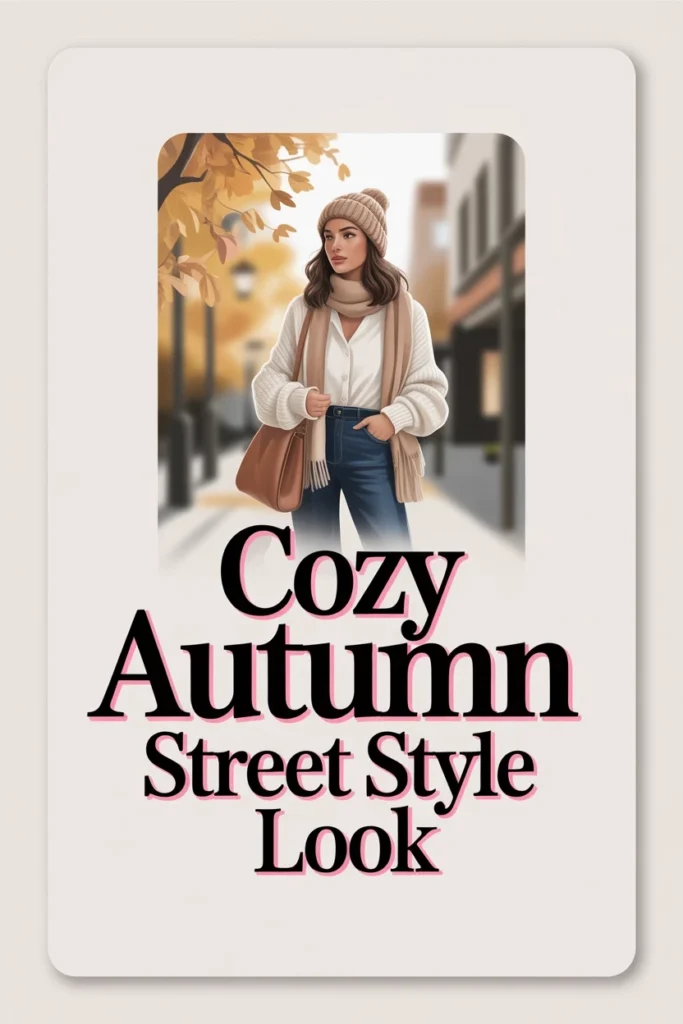
The fourth look is warm, layered, and genuinely fashion-forward — the kind of effortlessly cool street-style aesthetic that photographs beautifully and feels completely comfortable in cooler weather. This is the look that feels the most creative and the most personal of the five.
How to Build the Street Style Look
Wear the white shirt underneath a chunky knit jumper or oversized sweater, with just the collar and the very hem of the shirt peeking out below the knitwear.
This layered collar detail is a small but incredibly stylish touch that adds visual interest and a deliberately fashion-forward feeling to the outfit.
Wide-leg or straight-leg jeans work best for this aesthetic — they create a relaxed, cool silhouette that balances the volume of the chunky knit above perfectly. Roll the hems slightly to show the ankle and turn the shoe choice into a deliberate visual feature of the overall look.
Shoes and Accessories for the Street Style Look
Chunky ankle boots or knee-high boots ground the look and add to the effortlessly cool, street-style energy that this outfit is built around. Clean white trainers also work well if you want to keep the look lighter and more relaxed.
For outerwear, a long camel wrap coat, an oversized checked coat, or a classic wool trench all look outstanding layered over the knit-and-jeans combination.
For accessories, a large knit beanie or wide-brim felt hat, a long scarf loosely draped, and a structured leather tote or bucket bag all complete the look beautifully.
Why This Look Works
The layered shirt collar detail, the chunky knit, the wide-leg jeans, and the boots create a completely distinct aesthetic from the same base outfit — warm, textured, and unmistakably autumn-inspired.
The look feels intentionally seasonal and fashion-forward rather than simply practical, which is exactly what elevates street style from merely comfortable to genuinely stylish.
5. The Minimalist Chic Look
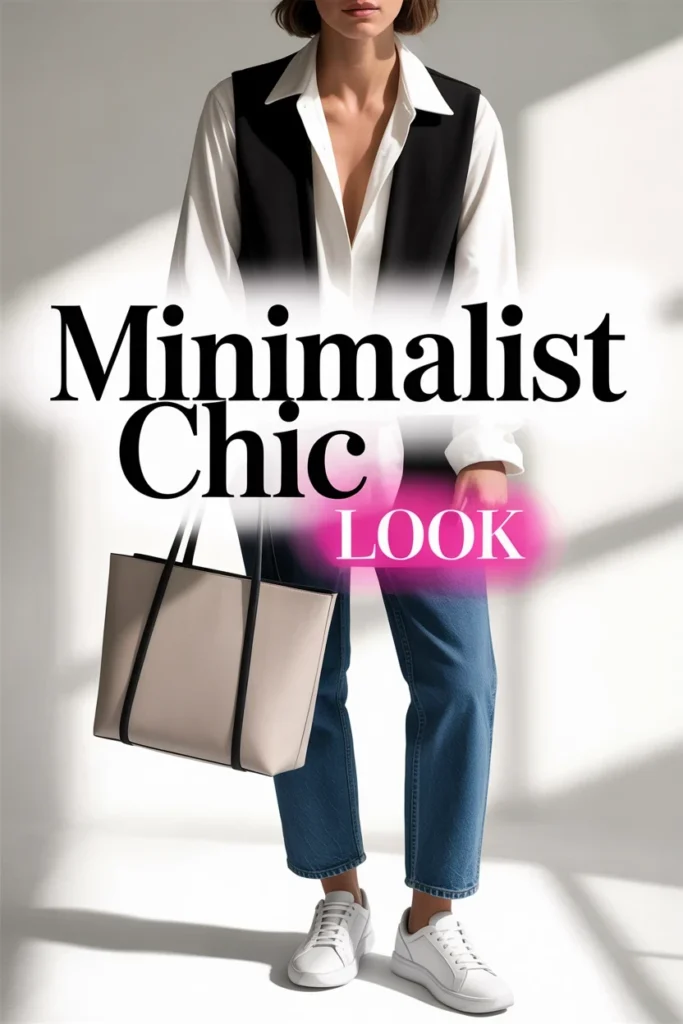
The fifth and final look is clean, modern, and quietly confident. This is the aesthetic of someone who understands instinctively that less is always more — the styling equivalent of a single, perfectly chosen word that says everything. No excess, no noise, just pure intention.
How to Build the Minimalist Look
Wear the white shirt completely open as a lightweight outer layer over a simple fitted white or black ribbed vest underneath. Let it hang completely naturally — no knotting, no tucking, no adjusting.
The effortlessness is entirely the point of this look. Choose straight-leg or wide-leg jeans in a clean mid to dark wash — the less distressed and the more streamlined the denim, the more refined and deliberate the overall look feels. Every element of this outfit should feel calm, intentional, and stripped back to its essence.
Shoes and Accessories for the Minimalist Look
Clean, simple, and completely deliberate. White leather trainers, simple black ballet flats, or minimal pointed-toe mules all work perfectly for this aesthetic.
Avoid anything too embellished, too chunky, or too visually loud — the shoes should complement without competing for attention. For accessories, this is where minimalist styling truly reveals its power: choose one single statement piece and let everything else remain completely bare.
One striking architectural ring, one bold cuff bracelet, or one long pendant necklace — pick one and commit to it fully. A sleek, minimal tote or small structured crossbody bag in a clean neutral tone finishes the look without adding visual noise.
Why This Look Works
The restraint itself is the style. By reducing every element to its simplest, cleanest, most considered form and allowing one single deliberate detail to do all the talking, this look communicates confidence, taste, and intention more powerfully than any heavily layered or accessorized outfit could. Minimalism is not the absence of style — it is style distilled to its absolute purest form.
The Core Principles Behind Outfit Restyling
Understanding why these five looks work so differently reveals the core principles behind all successful outfit restyling. These are the rules that professional stylists apply instinctively — and once you understand them, you can apply them to any outfit in your wardrobe with the same results.
Change the Shoe, and You Change the Entire Outfit
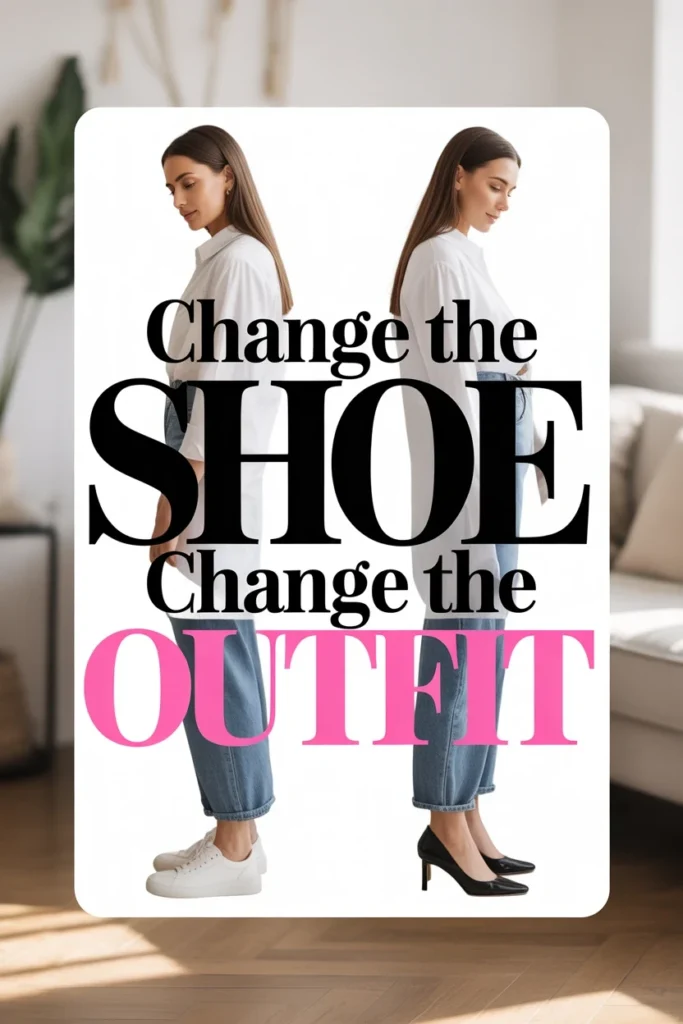
Of all the elements that influence how an outfit reads to the world, footwear has the greatest impact on a look’s overall tone, formality, and energy. A trainer communicates casualness. A heel communicates elegance.
Boots convey a cool, effortless vibe, while a loafer conveys polish. Swap one shoe for another and the entire outfit shifts its meaning — without a single other change being made.
Before you decide an outfit doesn’t work for a particular occasion, ask yourself whether a different pair of shoes might be all it takes to make it perfect.
The Trainer, The Heel, and The Boot Rule
The trainer takes almost any outfit in a more casual, relaxed direction.The heel lifts almost any outfit to a higher level of elegance and formality, while boots add a cool, effortless street-style energy.
Keep at least one excellent version of each of these three shoe types in your wardrobe, and your outfit options will multiply dramatically with every single piece you own.
Use Layering to Shift the Mood and Season
Every layer you add or remove changes the temperature and the energy of an outfit simultaneously. A blazer adds authority and polish. A chunky knit adds warmth and a touch of approachability.
An open overshirt adds relaxed effortlessness. A structured long coat adds elegance and drama. Before you decide that an outfit does not suit a particular occasion or season, ask whether adding or changing one single layer might be all it takes to make it work beautifully.
The One Layer Rule for Instant Transformation
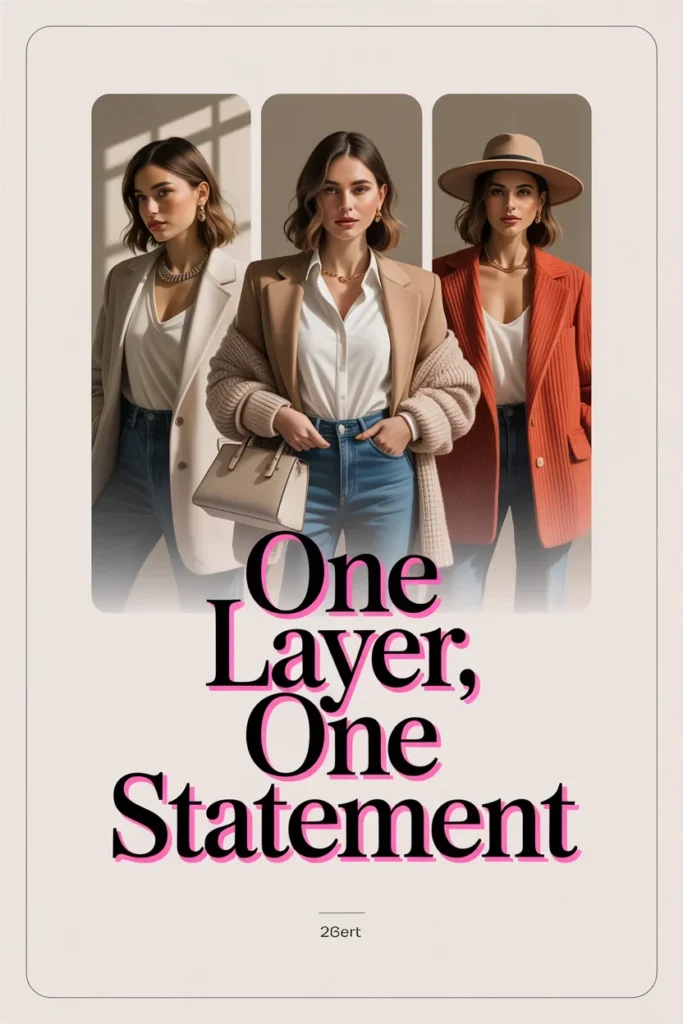
In most cases, one well-chosen layer is all it takes to completely change the character of an outfit. Adding more than one layer at a time can make the outfit feel cluttered or confused.
Add one layer, assess the result, and only add a second if the first has not already done the full job. Restraint in layering — as in all areas of styling — is almost always more powerful than excess.
Accessories Tell the Whole Story
Accessories communicate personality, occasion, and intention faster and more clearly than any other element of an outfit. A baseball cap says something fundamentally different from a pair of chandelier earrings — even when every single other part of the outfit is identical.
Building even a small, well-chosen collection of varied accessories and experimenting with unexpected combinations is one of the highest-return investments you can make in your personal style.
The One Statement Accessory Principle
The most powerful accessory rule in professional styling is this: choose one statement accessory per outfit and keep everything else simple and supporting. One bold earring. One striking bag. One standout belt. One statement ring.
When one element is clearly the focal point, and everything else steps back to support it, the overall look is always more stylish, more intentional, and more memorable than when multiple elements compete for attention.
Frequently Asked Questions
1. Does this restyling approach work with outfits other than a white shirt and jeans?
Ans: Absolutely — the principles applied in this guide work with any outfit combination you own. Take any two or three pieces you wear regularly and apply the same approach: change the shoe, swap a layer, change the accessories, adjust the tuck. You will find at least four or five genuinely distinct looks hiding inside every combination you own.
2. What if I do not own many accessories to work with?
Ans: Start small and strategic. A few genuinely versatile pieces — one structured bag, one casual bag, two or three pairs of earrings in different sizes, one good belt, and one quality scarf — are enough to create meaningful variety across your outfits.
Quality and versatility matter far more than quantity when it comes to building an accessory collection that actually works hard for you.
3. How do I figure out which of the five styling directions best suits my personal style?
Ans: Experiment freely and honestly, and pay careful attention to how you feel in each variation. The looks that make you feel most confident, most comfortable, and most authentically like yourself are the ones that align with your true personal style.
Style is ultimately a conversation between the clothes and the person wearing them — and only you can hear both sides of that conversation clearly.
4. Can I apply this restyling approach to a capsule wardrobe?
Ans: Yes—and in fact, restyling is the foundation of effective capsule wardrobe dressing. The whole point of a capsule wardrobe is to own fewer, more versatile pieces and wear each one confidently across multiple different contexts.
The skills taught in this guide are precisely what make a capsule wardrobe work brilliantly in real life rather than just look good on paper.
Conclusion
The ability to restyle what you already own is one of the most valuable and empowering fashion skills any woman can develop — and, as this guide has shown, it is entirely achievable with the clothes most women already have hanging in their wardrobes.
And once you start seeing your wardrobe through this lens — as a collection of possibilities rather than a fixed set of combinations — you will never look at a single outfit the same way again. The most stylish version of your wardrobe is not waiting in a shop somewhere. It is already hanging right in front of you.