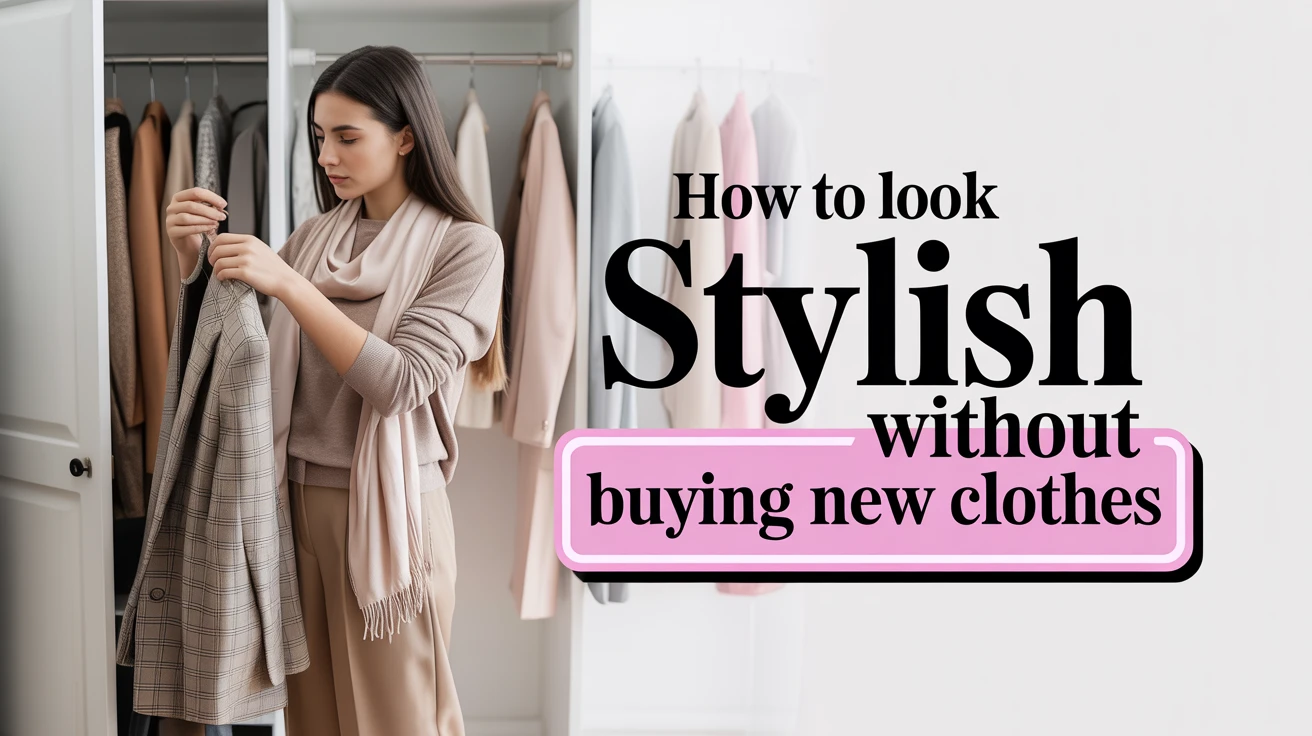
How to Look Stylish Without Buying New Clothes (Smart Styling Tips)
Here is a scenario most of us know all too well. You are standing in front of a wardrobe packed with clothes, and yet somehow, you have “nothing to wear.” So you do what feels logical — you go shopping, buy a few new pieces, feel great for about a week, and then find yourself back at square one, staring at the same overwhelming wardrobe with the same familiar feeling.
The problem is rarely a lack of clothes. The problem is almost always a lack of styling knowledge.
The most stylish people in the world are not necessarily the ones who spend the most money on clothing. They are the ones who understand how to work with what they have — how to combine pieces in unexpected ways, how to use accessories to transform an outfit, and how to carry themselves so that even simple clothes look intentional and put-together.
In this guide, we’ll show you exactly how to look stylish. These are practical, actionable styling tips that require zero shopping, zero budget, and zero wardrobe overhaul. Just a fresh perspective on the clothes already hanging in your closet.
Tip 1: Do a Proper Wardrobe Audit First
Before you can style what you have, you need to actually know what you have. Most people are genuinely surprised by what they find when they pull everything out and lay it flat.
Set aside an hour and take every single item out of your wardrobe. Sort everything into three piles: things you wear regularly, things you have not worn in over a year, and things you forgot you even owned. That third pile is pure gold. These are pieces that are already yours, already paid for, and already waiting to be styled — you just lost track of them under the clutter.
Hang everything back up neatly, organized by category — tops, bottoms, dresses, outerwear — and by color within each category. When your wardrobe is organized visually, you start to see combinations you never noticed before. Items that seemed to have no place suddenly find their partners.
The key takeaway: Visibility creates possibility. You cannot style what you cannot see.
Tip 2: Master the Art of Tucking
This one small technique can completely change the way an outfit looks — and it costs absolutely nothing.
Tucking in your top, even partially, instantly creates a defined waistline, adds structure to an outfit, and makes it look deliberate and styled rather than thrown together. There are several ways to do it, and each creates a slightly different effect.
The full tuck — where the entire hem of the top is tucked into the waistband — looks polished and sharp, particularly with high-waisted trousers or skirts. The half tuck — where only the front section of the top is loosely tucked in — creates a relaxed, effortlessly cool look that works beautifully with jeans and casual trousers. The side tuck — where one side is knotted or tucked, and the other hangs loose — adds asymmetry and interest to a simple outfit.
Try tucking a plain white t-shirt into high-waisted jeans and compare how it looks untucked versus with a front half tuck. The difference is striking. Same clothes, completely different outfit energy.
Tip 3: Rethink How You Layer
Layering is one of the most powerful styling tools available, and most people use only about 10% of its potential.
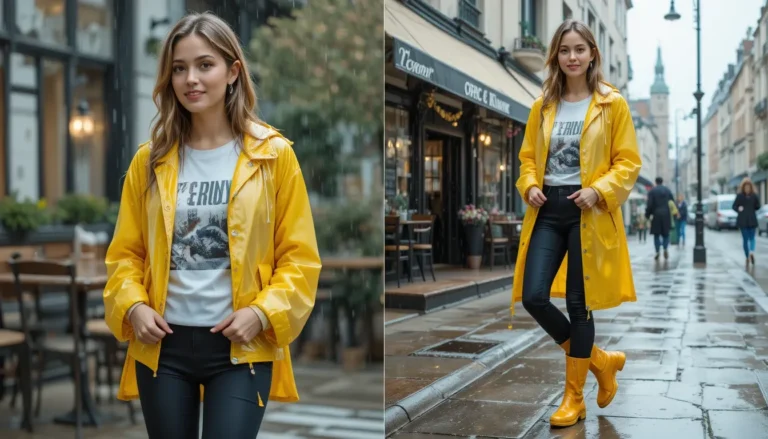
The obvious version of layering is wearing a jacket over a top. But there is so much more you can do. Try wearing a fitted turtleneck under a slip dress. Layer a crisp white button-down shirt under a crew-neck jumper, with just the collar and cuffs peeking out.
Wear a longline cardigan over a simple t-shirt and trousers combination. Throw a denim jacket over a floral midi dress for an unexpected contrast of casual and feminine.
The key to great layering is playing with different lengths, textures, and weights. A chunky knit over a silky blouse creates an interesting contrast. A structured blazer over a relaxed linen shirt adds polish to a casual look. When the layers have visual contrast — in texture, length, or formality — the outfit immediately looks more considered and stylish.
Also, consider layering unexpected orders. Instead of always wearing a shirt under a jumper, try a longline shirt over a jumper as an over-shirt. Fashion rules are meant to be questioned.
Tip 4: Use Accessories as Outfit Transformers
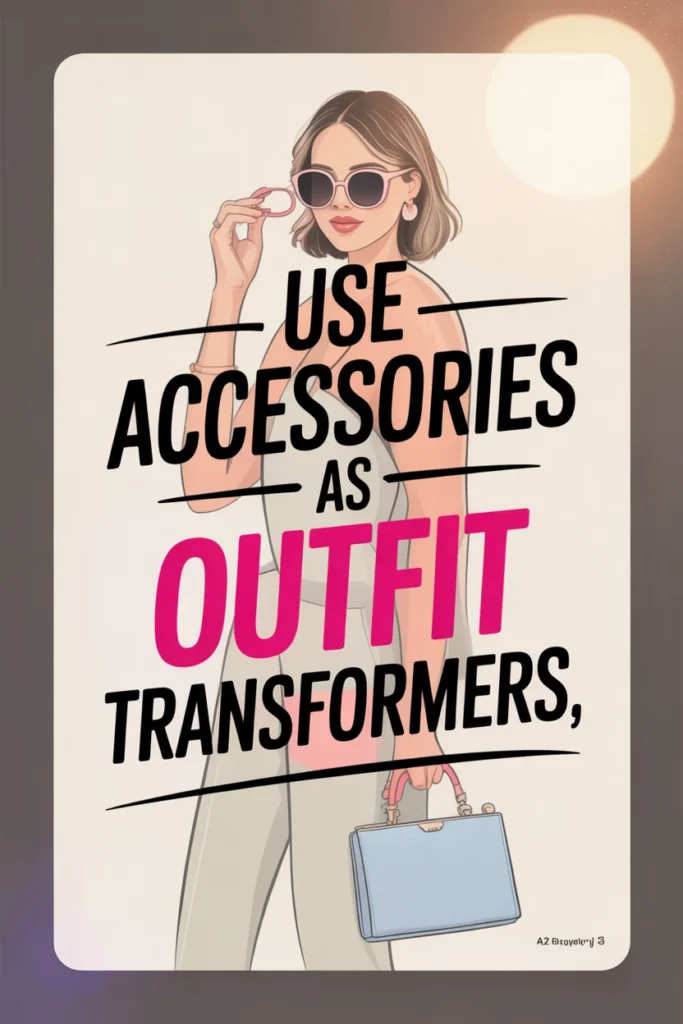
If there is one area where most people massively underutilize what they already own, it is accessories. A single outfit can look completely different depending on which accessories you pair it with — and that means your accessories are essentially giving you multiple outfits from one combination of clothes.
Take a simple jeans-and-white-top outfit as an example. Add a silk scarf tied loosely around the neck and a pair of gold hoops — it reads as effortlessly chic. Swap the scarf for a chunky necklace and a leather belt — suddenly it looks edgier and more deliberate.
Replace those with a baseball cap and minimal accessories — it becomes cool and street-style inspired. Three completely different looks. Same jeans and white top.
Go through your accessories — belts, scarves, jewelry, bags, hats, sunglasses — and start experimenting with combinations you have never tried before. Belts in particular are dramatically underused.
Cinching a belt over a loose blazer, a chunky knit, or even an oversized shirt can completely reshape an outfit and define your silhouette in a way that feels polished and intentional.
Tip 5: Experiment With Proportion and Silhouette
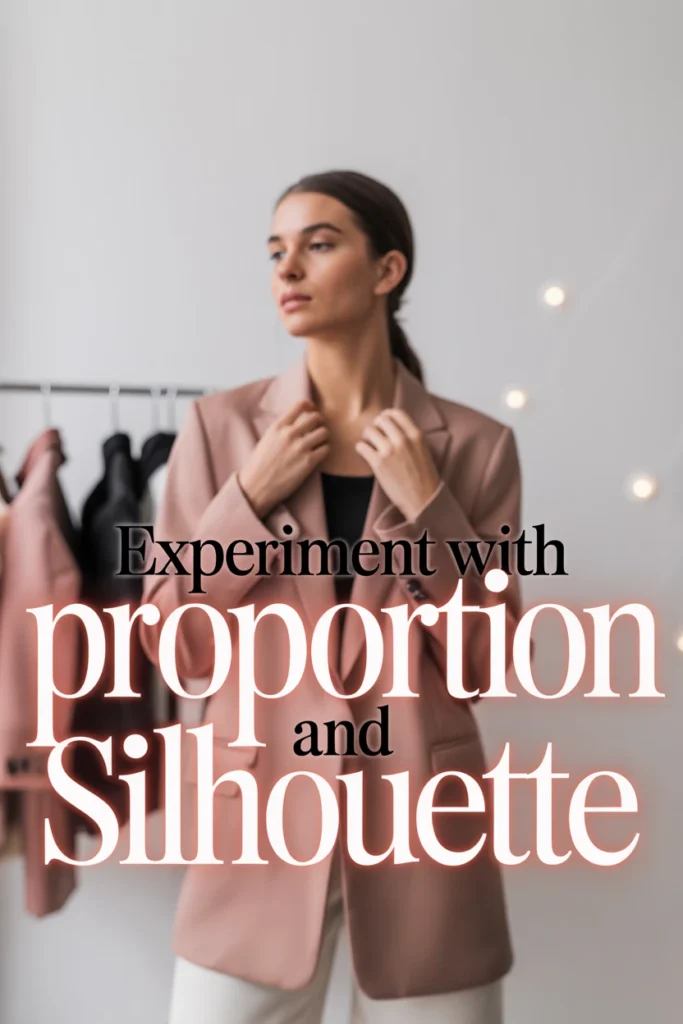
One of the most important concepts in styling is proportion — the relationship between the fitted and the loose, the short and the long, the structured and the relaxed.
The general rule that stylists live by is this: balance a loose item with a fitted one. If you are wearing wide-leg trousers, pair them with a fitted or tucked-in top.
If you are wearing an oversized jumper, balance it with slim trousers or a mini skirt. This creates a silhouette that feels intentional rather than just baggy or shapeless, but proportion is also about playing with lengths.
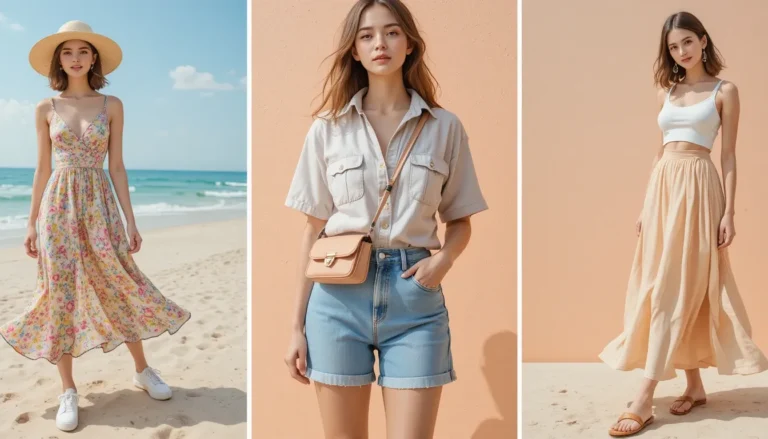
Try pairing a cropped top with high-waisted wide-leg trousers. Try layering a long oversized shirt over fitted cycling shorts. Try belting a maxi dress to create a two-tier effect. These combinations use the clothes you already own, arranging them to create fresh, modern silhouettes.
Do not be afraid to try combinations that feel slightly unusual at first. Some of the most stylish outfits come from ignoring the obvious pairing and trying something unexpected instead.
Tip 6: Restyle Your Existing Pieces in New Ways
Most people wear every piece of clothing in exactly one way — the way it was styled on the hanger in the shop. But many items in your wardrobe are far more versatile than you have given them credit for.
A shirt dress can be worn as a dress, but it can also be worn open as a lightweight jacket or duster coat over trousers and a plain tee. A silk slip dress can be worn alone in summer or layered over a fitted long-sleeve top in cooler months.
A wide scarf can be worn around the neck, tied in the hair as a headband, wrapped around the waist as a belt, or even tied as a halter top. A men’s oversized button-down shirt can be worn tucked in, knotted at the front, worn open over a swimsuit as a cover-up, or worn backward for an unexpectedly fashion-forward look.
Before you decide that a piece “does not go with anything,” challenge yourself to think of three completely different ways you could wear it. You will almost always surprise yourself.
Tip 7: Pay Attention to Fit
This is probably the single most important factor in whether an outfit looks stylish or not — and it has nothing to do with buying new clothes. It has to do with how well your existing clothes fit your body.
Clothes that are too large can make even the most expensive outfit look sloppy and unintentional. Clothes that are too tight create visible pulling, bunching, and discomfort that no amount of styling can fix.
But clothes that fit well — that skim the body in the right places, sit at the right length, and move comfortably — look polished and put-together even if they are completely basic.
The good news is that tailoring is far less expensive than most people think. Having a pair of trousers hemmed to the right length, a blazer taken in at the waist, or a dress adjusted at the shoulders can completely transform how a piece looks on your body. A ten-dollar tailoring job on a fifty-dollar dress can make it look like a two-hundred-dollar dress.
If tailoring is not in your budget right now, focus on choosing which of your clothes already fit you best and build your outfits around those pieces while you work toward adjusting the others.
Tip 8: Build Outfits Around a Neutral Base
If you feel like nothing in your wardrobe goes together, the issue is often that you are trying to match pieces that are all competing for attention at once. The solution is to build outfits around a neutral base and add color or pattern as an accent.
Neutral bases include white, black, grey, navy, beige, camel, and cream. When the majority of your outfit is built on one of these foundations, it is much easier to add a colorful or patterned piece without the outfit looking chaotic or clashing.
For example, a camel coat over all-black separates is a classic, effortlessly stylish combination. A white shirt tucked into navy trousers with tan accessories is clean, timeless, and smart.
Adding a bright red bag or a printed scarf to an otherwise neutral outfit creates a focal point that looks deliberate and stylish rather than overwhelming.
Look at your wardrobe and identify your neutral pieces. These are your building blocks. From there, practice adding one statement piece per outfit — a bold color, an interesting texture, or a print — and keeping everything else simple.
Tip 9: Take Care of Your Clothes Properly
This tip is often left out of styling guides, but it is genuinely one of the most important. Clothes that are clean, wrinkle-free, and in good repair always look more stylish than clothes that are not — regardless of how much they cost.
A crumpled linen shirt looks cheap and careless. The same shirt, freshly pressed, looks expensive and intentional. A cashmere jumper covered in pilling looks tired and worn out. The same jumper, depilled with a fabric shaver, looks brand new.
Invest in a garment steamer if you do not already own one — they are inexpensive and make a remarkable difference in how your clothes look when you wear them. Use a fabric shaver on knitwear to remove pilling.
Check your clothes regularly for loose buttons, small tears, or undone hems and fix them promptly. Wash clothes according to their care labels to prevent fading, shrinking, and fabric damage.
The condition of your clothes communicates a great deal about your attention to detail. Well-maintained clothes at any price point look far more stylish than neglected ones.
Tip 10: Wear Clothes With Confidence and Intention
No styling tip in the world will work as well as this one. Confidence is the most powerful accessory you own — and it is completely free.
When you put on an outfit, commit to it fully. Stand up straight, move with ease, and wear whatever you have chosen with the energy of someone who made a deliberate, stylish choice.
People who consistently look stylish are not always wearing the most expensive or trend-forward clothes. They are wearing whatever they have with complete confidence and ease.
A lot of styling is also about intention. When an outfit looks like it was carefully put together — even if it only took five minutes — it reads as stylish. When it looks like you just grabbed whatever was on the floor, it reads as careless, even if the individual pieces are beautiful.
Think about each outfit as a deliberate composition: a color story, a balance of proportions, a focal point. Even a simple outfit can look incredibly stylish when it is clearly intentional.
Frequently Asked Questions
1. Can I really look stylish without spending any money?
Ans: Absolutely. Style is not about price tags — it is about understanding proportion, fit, color, and how to put pieces together in a way that looks intentional. Many of the world’s most stylish people are experts at working with what they have rather than constantly buying new things.
2. What is the most impactful styling change I can make today?
Ans: Fix your fit. Choose the clothes in your wardrobe that already fit your body well, and build your outfits around those pieces first. Nothing elevates an outfit faster than properly fitting clothes.
3. How do I make a simple outfit look more stylish?
Ans: Add one interesting element — a belt, a layered necklace, a tucked-in hem, an unexpected shoe choice — and keep everything else clean and simple. One deliberate detail is all it takes to elevate a basic outfit from plain to polished.
4. What should I do with clothes I never wear?
Ans: If an item does not fit, does not suit you, or genuinely does not bring you any joy when you wear it, consider donating or swapping it. A smaller, well-curated wardrobe of pieces you love and wear regularly will always serve you better than a large wardrobe full of things you constantly overlook.
Conclusion
Looking stylish has very little to do with how much money you spend on clothes and everything to do with how you use what you already have. A wardrobe audit, a better understanding of proportion and layering.
The smart use of accessories, proper garment care, and, above all, confidence can completely transform the way you look and feel every single day without spending a single penny. Your perfect outfit is probably already hanging in your wardrobe. You just have not styled it yet.